


 Metropolitan France
 United Kingdom
 Deutschland
 Belgique
 Österreich
 España
 Italia
 Nederland
 Danmark
 Sverige
 Portugal
 Polska
 Luxembourg
 Other countries

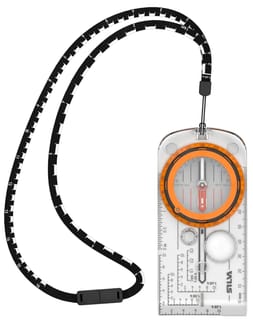

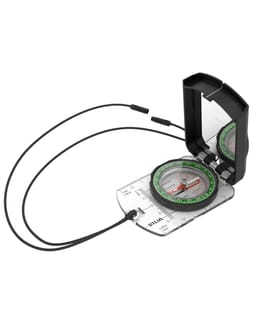


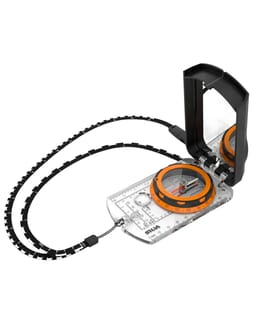

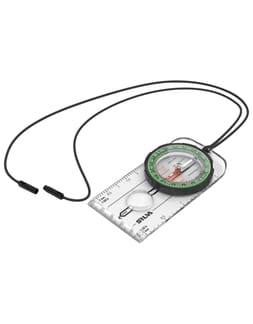
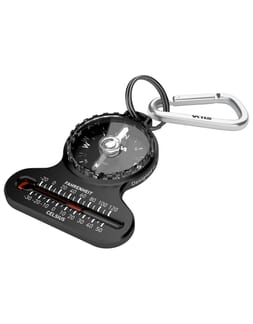
An essential item in your backpack, the compass remains the most reliable navigation instrument for hiking, with no need to worry about batteries or signal. Discover our selection of compasses suited to all your outdoor adventures, from mountain trekking to orienteering.
Why choose a compass for hiking?
A centuries-old instrument that has lost none of its relevance in the digital age, the compass continues to be a must-have piece of equipment for mountain enthusiasts. Before detailing the selection criteria, let's focus on what makes it so valuable and the physical principle behind its reliability.
The advantages of hiking compasses
A compass is always a reliable instrument. Where a GPS can run out of battery or lose signal in a deep gorge, a compass will keep pointing north year after year. It's one of the essential tools to add to your hiking backpack. Practical and compact, it takes up hardly any space! Its light weight, often under 40 grams for basic models, makes it a discreet companion that fits in a jacket chest pocket or hangs from a cord around your neck.
This instrument allows you to check your position even at night thanks to the phosphorescent markers found on most models designed for hiking and mountaineering, making it easy to find your way even in low visibility. Unlike electronic devices, it works just as well in extreme cold, rain, at altitude or in areas without satellite coverage. It's precisely this uncompromising robustness that makes it a favourite among hikers, trekkers, mountaineers and orienteering enthusiasts.
How does a compass work?
The principle of the compass is based on the Earth's magnetism. The magnetised needle, mounted on a pivot at the centre of the dial, naturally aligns with the Earth's magnetic field and always points to magnetic north. Around the needle, the graduated compass rose allows you to instantly read your orientation, while the rotating bezel on the edge of the dial is used to set your bearing. Note that magnetic north and true north (as shown on maps) are not exactly the same: the difference, called magnetic declination, varies depending on your location. In mainland France, this declination is small, around 1 to 2 degrees depending on the region, but it's important to take it into account for precise navigation.
Used with a topographic map, the compass lets you set a bearing, that is, the direction to follow expressed in degrees (from 0 to 360°). Each degree corresponds to a precise angle: 0° for north, 90° for east, 180° for south and 270° for west. A direction-of-travel arrow engraved on the baseplate then shows the exact direction to follow on the ground. This simple reading makes the compass the most accessible navigation tool for any outdoor enthusiast, whether you're a beginner at map reading or an experienced hiker seeking precise bearings.
The different types of compasses
Snowleader offers a wide selection of compasses to help you navigate easily during your cycling or walking hikes. Each activity has its own requirements and there are several models to suit your needs: classic hiking, mountaineering, orienteering or expeditions. Here are the main types of compasses to know before making your choice.
Baseplate compasses
For navigating with a map, we recommend baseplate compasses, which are the most suitable. Featuring a transparent graduated baseplate and often equipped with a magnifier, they can be placed directly on the map to plot a bearing with precision. This is the most versatile model, recommended for most hikers and beginners wanting to learn traditional navigation. Leading models from Silva, such as the Ranger or Expedition, offer an excellent balance between reading accuracy and ease of use for outings in mid-mountain terrain, with a liquid-filled capsule that quickly stabilises the needle after each reading.
Mirror compasses
Mirror compasses are designed for demanding users seeking maximum precision. The integrated mirror allows you to sight a distant point while reading the needle at the same time, ensuring very precise bearings, sometimes measured in mils for military or technical use. In our selection, the Silva Expedition S perfectly illustrates this premium segment, while the Sighting Compass with Mirror by SOL is a robust alternative designed for the harshest conditions. Favoured in mountaineering, expeditions and orienteering, they are ideal when the terrain becomes technical or navigation requires great accuracy.
Thumb compasses
Compact and ultra-fast to read, thumb compasses attach directly to your thumb to free up your other hand. They are the tool of choice for orienteering runners who need to read their bearing on the move without slowing down. This highly specialised segment is not currently included in our selection, which focuses on baseplate and mirror models covering the vast majority of hiking and mountain needs.
How to choose the right hiking compass?
Choosing your compass means matching your actual activity with the technical features of the model. The following criteria will help you refine your choice, before an overview of the brands in our catalogue.
Selection criteria
The choice of compass depends above all on your activity and the level of precision required. Here are the main criteria to consider before buying:
- Intended use: hiking, mountaineering, orienteering, trekking expeditions or simple walks
- Measurement accuracy and graduation detail: the finer the degrees, the more accurate your bearings
- The presence of a sighting mirror for technical activities or high mountain use
- The type of liquid damping: a well-damped capsule stabilises the needle more quickly
- Calibration zone (northern, equatorial, southern): essential for distant expeditions
- Practical features: integrated magnifier, millimetre ruler, map scales, phosphorescence for night reading
- Robustness and waterproofness of the case
Popular brands: Silva and more
The hiking compass market is dominated by a few historic manufacturers whose reputations have been built over decades. Silva, a Swedish brand founded in 1933, is widely regarded as the pioneer of the modern compass: Silva compasses are known for their reliability, accuracy and durability, whether for hiking, navigation or mountaineering. The brand still equips a large number of orienteering athletes and dominates our catalogue with models like the Ranger, Field or Pocket, each designed for a specific use. SOL completes our range with two models focused on safety and precision, including a mirror compass particularly suited to expeditions. For tighter budgets or occasional use, Trigano offers an entry-level model that's a great first choice for family outings or day walks.
Using and caring for your compass
Once you've chosen your compass, it's important to get the most out of it in the field and ensure its longevity. The following tips apply both to your first trips in mid-mountain terrain and to more demanding expeditions.
Usage tips
To use your compass correctly, always hold it horizontally at chest height, away from any magnetic sources such as a phone, smartwatch, ice axe or metal objects that could affect the reading. The red needle points to magnetic north: then turn the rotating bezel to set your desired bearing, and follow the direction-of-travel arrow on the baseplate to move in the right direction.
When using a GPS, the compass is not a competitor but a natural complement. It allows you to confirm a bearing, continue in case of battery failure or in areas where satellite signal is weak, such as dense forests, canyons or high mountains. Discover our selection of hiking GPS devices as well as our full range of navigation instruments, designed to work hand in hand with your compass. The two instruments are not opposed, but complement each other for safe and effective navigation, especially on long, self-sufficient trips where reliable navigation is key to safety.
Common mistakes to avoid include: holding the compass at an angle, which blocks the needle; placing it near a metal object; forgetting to account for magnetic declination when reading; or failing to regularly reorient the compass as you progress.
Care and storage
A compass is a durable instrument that can last for many years if properly maintained. Store it in a dry place at room temperature, away from any magnetic or electronic sources such as speakers, magnets or smartphones. Pay particular attention to prolonged contact with other magnetised instruments in your bag, which can destabilise the needle over time. Also avoid leaving your compass exposed to prolonged heat, such as in a car glove box in summer, as this can create air bubbles in the liquid capsule and affect needle stability. Clean the case with a soft, slightly damp cloth, avoiding harsh solvents.
Hiking compass FAQ
What is the average accuracy of a hiking compass?
Most hiking compasses offer a reading accuracy of 2 degrees, which is more than sufficient for standard navigation in the field. Mirror models designed for mountaineering or orienteering can achieve an accuracy of 1 degree or less for extremely precise bearings.
Can you use a compass without a topographic map?
Yes, a compass can be used on its own to maintain a bearing or find a general direction, for example to head east after entering a forest. However, for precise navigation on a set route, combining it with a topographic map remains the most reliable and complete method.
How do you use a compass with a GPS for better navigation?
The most reliable method is to use the GPS to find your exact position on the map, then plot your bearing with the compass to follow a precise direction on the ground. This complementarity is especially useful when the GPS signal becomes unstable, in dense forest, canyons or at high altitude: the compass then takes over without fail. Remember to regularly realign your compass with identifiable visual landmarks to avoid drifting off course. You'll also find our range of GPS watches.


Sign up for our newsletter
Be the first to hear about promotions, sales, special offers, snowleader events, and new brands added to our catalog!
By signing up for our newsletter, you agree to receive our personalized emails and to allow us to track whether you open them. You can change your consent at any time after you first receive a communication, or after creating your account, if applicable.


