


 Metropolitan France
 United Kingdom
 Deutschland
 Belgique
 Österreich
 España
 Italia
 Nederland
 Danmark
 Sverige
 Portugal
 Polska
 Luxembourg
 Other countries


Available colours:


Available colours:


Available colours:

Available colours:

Available colours:

Available colours:



Available colours:
Available colours:
Available colours:


Available colours:

Available colours:


20% off
On the entire city section* with the code CITY20*
Available colours:

Available colours:


Available colours:



Available colours:
Available colours:
Available colours:
Available colours:


FALL SALE: UP TO 50% OFF
On a wide selection of products*

Available colours:
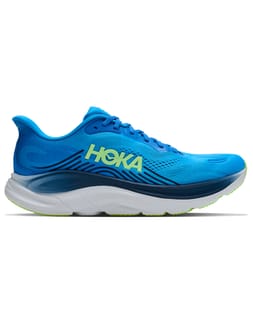
Available colours:
Whether you're training for your first 10k or logging long runs every week, the running shoes you wear are key to both your comfort and your progress. Discover a wide range of men's running shoes and women's running shoes on Snowleader, carefully selected to suit every type of runner.
How to choose your running shoes?
Your body type, gait, running surface and target distances all influence which running shoes are right for you. A lightweight runner alternating between road and trail will have different needs than a heavier runner preparing for a marathon. Taking the time to understand these factors ensures you run in a pair truly suited to your goals. For more advice, check out our selection of the best running shoes.
Understanding your gait type
Every runner lands differently, and your foot mechanics directly affect which running shoes you should choose. There are three main types:
- Neutral gait: the foot rolls evenly without significant deviation. Most running shoes are suitable for this profile.
- Overpronation: the foot rolls inward on landing. Running shoes with medial support and structured stability help correct this.
- Supination: the foot rolls outward, which is less common. Opt for a flexible model with generous cushioning to compensate for reduced ground contact.
If you're unsure about your gait, a specialist store assessment or a sports podiatrist can provide a reliable answer.
Choosing for the surface: road or trail
The surface you run on changes the demands on your running shoes. On tarmac or track, prioritise lightness, responsive cushioning and a smooth sole for a fluid stride. On trails, you need grippy lugs, a stiffer sole and reinforced protection to tackle technical terrain. Explore our range of trail running shoes for the most demanding conditions.
Some versatile models bridge the gap between road and trail, a great option if you like to mix up your routes.
How to choose the right size?
When running, your feet naturally swell and your toes need space, especially on descents, to avoid blisters and black toenails. It's best to choose half a size to a full size up from your usual street shoes. For the best fit, try your running shoes at the end of the day when your feet are slightly larger, and wear the socks you use for training.
Technologies that make a difference
Cushioning and comfort
Cushioning is the technical heart of a running shoe: it absorbs impact with every stride and protects your joints mile after mile. Depending on your profile and running style, you'll need different levels of protection:
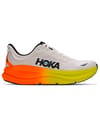
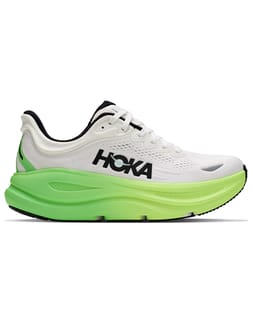
- Soft cushioning: wraps the foot in plush comfort, ideal for long distances and runners prioritising joint protection. Hoka One One is renowned for this, with thick soles that popularised maximalist cushioning.
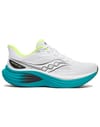
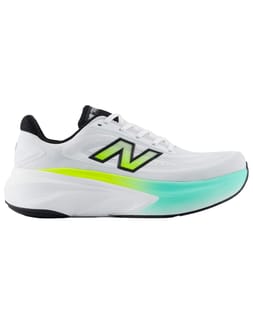
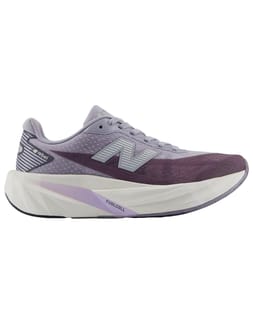
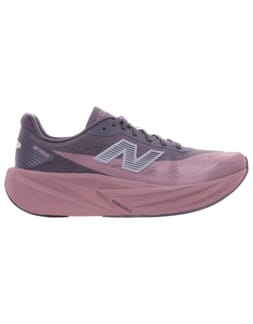
- Responsive cushioning: designed to return energy with every step, perfect for runners seeking speed. New Balance and Saucony offer highly advanced foams in this category.
- Firm cushioning: closer to the ground, suited to lighter runners or short, fast sessions where ground feel is key.
Recent innovations
Carbon plates in the midsole, first seen in race shoes, are now available in daily trainers. Their purpose: stiffen the flex zone to propel you forward with less muscle effort. Meanwhile, new-generation foams are lighter yet durable, and technical mesh uppers improve breathability and support. These advances mean you can find running shoes for every runner, from casual joggers to demanding competitors.
The best running shoe brands
Each brand has its own approach to running, and understanding these differences helps you find the running shoes that suit you. Salomon is known for trail shoes with Contagrip soles for outstanding grip on muddy or rocky ground. At the other end, On Running features CloudTec technology, with hollow pods that cushion on impact and firm up for a powerful toe-off.
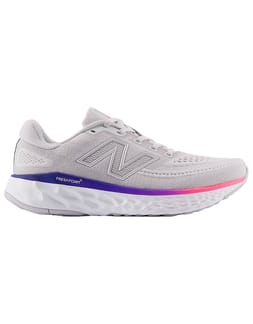
On the road, New Balance stands out with its FreshFoam cushioning, praised for its balance of softness and energy return, ideal for both long runs and interval sessions. Saucony appeals to runners seeking plush cushioning with remarkable lightness. For those wanting a more natural stride, Altra offers zero-drop models that keep the foot flat, encouraging a physiological roll on both road and trail.
For versatility, Adidas Terrex and Hoka One One cover a wide range of uses, from forest paths to city runs, with lines for both men and women.
Men's and women's running shoes
Beyond colourways, women's models feature a narrower heel fit, sometimes a different drop, and cushioning tuned for generally lighter body weight. These construction differences ensure optimal support, whether you want stability for long runs or responsiveness for speed sessions.
Caring for your running shoes
Well-maintained running shoes retain their cushioning and support much longer. A few simple habits make all the difference:
- After each run, remove the insoles and let your shoes air dry away from direct heat, which can damage the foam.
- For cleaning, use a soft brush and lukewarm water. Avoid machine washing, which can deform the upper and weaken the glue.
- If you run regularly, alternate between two pairs: this rest period allows the foam to recover its volume and cushioning between runs.
Generally, running shoes should be replaced every 600 to 800 km, depending on the model, your weight and the surfaces you run on. Noticeable loss of cushioning or uneven sole wear are clear signs it's time for a new pair.
FAQ: your running shoe questions answered
What are the best running shoes for beginners?
If you're new to running, choose running shoes with a neutral gait, comfortable cushioning and good foot support. A drop between 8 and 10 mm helps transition from walking to running with stable support, without restricting your natural stride. Brands like Hoka One One or On Running offer particularly accessible models for your first kilometres.
Which running shoes are best for long distances?
For half marathons, marathons or runs over two hours, long-term comfort is more important than pure performance. Choose running shoes with enhanced cushioning to protect your joints over the miles, combined with a snug fit to reduce friction. Some models feature a carbon plate in the midsole, which helps reduce muscle fatigue by improving propulsion.
Should you choose lightweight or stable shoes for your level?
The answer depends on both your level and your gait. Beginners or those prone to injury should prioritise stability and cushioning to protect joints while building strength. As you progress and your running technique improves, you can move towards lighter, more responsive models designed to return more energy with each stride. Ideally, you'll have several pairs suited to different types of sessions.
Snowleader offers free delivery from CHF 199 and free returns within 60 days, so you can try your running shoes in real conditions.



Sign up for our newsletter
Be the first to hear about promotions, sales, special offers, snowleader events, and new brands added to our catalog!
By signing up for our newsletter, you agree to receive our personalized emails and to allow us to track whether you open them. You can change your consent at any time after you first receive a communication, or after creating your account, if applicable.


