


 Metropolitan France
 United Kingdom
 Deutschland
 Belgique
 Österreich
 España
 Italia
 Nederland
 Danmark
 Sverige
 Portugal
 Polska
 Luxembourg
 Other countries





20% off
On the entire city section* with the code CITY20*



FALL SALE: UP TO 50% OFF
On a wide selection of products*


For hiking, trail running, ski touring or mountain biking, a hydration bladder is the essential accessory that lets you drink continuously without breaking your stride. Snowleader brings together hydration reservoirs from leading mountain brands to support you on every adventure.
Why choose a hydration bladder?
Drinking regularly during physical activity helps conserve energy. Hydration systems like bladders provide a steady flow of liquid without interrupting your sport. Where a water bottle requires a stop, a movement and often removing your pack, a bladder sits flat against your back, delivers water through a tube to your shoulder, and stays out of the way. On long outings where every pause disrupts your rhythm, continuous hydration becomes a real advantage, especially as the weight of the reservoir decreases as you drink.
Depending on your activity, you'll find the essentials among these hydration bladders and accessories with several clear benefits:
- continuous hydration without slowing down or taking a bottle out of your pack;
- generous capacity, from 1 to 3 litres, distributed flat against your back;
- minimal bulk and weight that lightens as you go;
- compatibility with most hiking rucksacks and trail running vests.
Which hydration bladder for which activity?
Not all mountain sports require hydration in the same way. For trail running and running on paths, you need a flexible, lightweight reservoir that fits in a trail running backpack, moulds to your back and doesn't bounce as you move. Day hiking allows for larger volumes and prioritises durability over pure lightness, while ski touring adds the challenge of cold: in freezing temperatures, an insulated tube or emptying the tube after each sip prevents ice blockages. For mountain biking and mountaineering, the bladder frees your hands and chest for steering and climbing, where a bottle would be out of reach at the worst moment.
How to choose the right hydration bladder?
The right reservoir depends mainly on the length of your outings and the pack it will fit into. Two criteria deserve attention before buying.
Capacity and compatibility with your pack
How far will you go before you can refill? For short trips or intense efforts like trail running, a 1 to 1.5 litre bladder is enough and avoids unnecessary weight. For day hikes or ski touring races, 2 to 3 litres is justified, a capacity found in models designed for a day hiking rucksack. Check that your pack has a dedicated hydration compartment and a tube exit: most bladders fit packs designed for this, but checking the size and attachment location will prevent surprises when you get home.
Material and ease of cleaning
The material affects both hygiene and the lifespan of your bladder. Quality models are made from food-grade TPU, BPA-free, a flexible plastic that withstands winter cold and doesn't affect the taste of your water. Cleaning is mainly about design: a wide opening gives access for filling and drying, and a removable tube, cap and valve are much easier to rinse than a fixed set.
And for self-sufficient outings?
When you leave supply points behind, on multi-day treks or self-sufficient expeditions, water quality becomes a concern. Some flexible bladders connect directly to a filter, like filter bladders that remove bacteria and protozoa without slowing the flow. For more options, the water filtration and treatment category includes filters and tablets so you can drink safely from a mountain stream or lake.
Hydration bladder brands at Snowleader
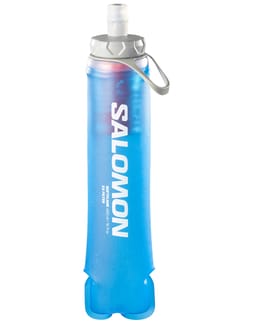
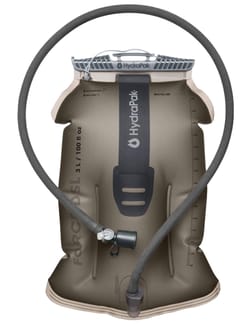
Snowleader has selected hydration bladders that are easy to insert in your pack and protected against bacteria and mould. Discover Osprey, Salomon, Hydrapak. Hydrapak is a reference in this field, with wide-opening reservoirs designed for effortless cleaning and materials built to last season after season. Source, another recognised hydration specialist, equips its Widepac bladders with a Helix valve praised for its flow and durability. At Platypus, the range includes the Big Zip EVO with a leakproof closure and ultralight flexible bladders from the Hoser line, ideal for saving weight. Osprey designs its reservoirs to fit perfectly with its own packs, while Salomon meets the needs of trail runners seeking lightness, and Deuter completes the selection with robust, everyday-friendly bladders.
FAQ: Everything you need to know about hydration bladders
How do you clean a hydration bladder properly?
Rinse your bladder with hot water after each use, including the tube and valve where moisture tends to linger. For deep cleaning, a brush kit lets you reach the inside walls and tube. Then let everything dry with the wide opening exposed and walls separated, in a well-ventilated area.
How do you prevent mould?
Mould develops when moisture is trapped between uses. The most effective habit is to dry the bladder completely and store it open, in the air. If you can't dry it quickly, keeping it in the freezer between uses stops bacteria growth.
Can you put anything other than water in it?
Pure water is best for preserving the system's longevity. Sweet drinks and sports drinks are possible, but only if you clean the tube and valve immediately and thoroughly, otherwise sugary residues quickly lead to sticky deposits and mould.



Sign up for our newsletter
Be the first to hear about promotions, sales, special offers, snowleader events, and new brands added to our catalog!
By signing up for our newsletter, you agree to receive our personalized emails and to allow us to track whether you open them. You can change your consent at any time after you first receive a communication, or after creating your account, if applicable.


