


 Metropolitan France
 United Kingdom
 Deutschland
 Belgique
 Österreich
 España
 Italia
 Nederland
 Danmark
 Sverige
 Portugal
 Polska
 Luxembourg
 Other countries


Available colours:

20% off
On the entire city section* with the code CITY20*


Available colours:



FALL SALE: UP TO 50% OFF
On a wide selection of products*


Essential for added comfort, warmth, and hygiene, a sleeping bag liner fits inside your sleeping bag or can be used alone in a mountain hut. Snowleader has selected silk, cotton, and synthetic models, suitable for camping, trekking, or bivouacking in the mountains.
Sleeping bag liners for maximum comfort
Offering excellent value for money, the sleeping bag liners chosen by Snowleader are comfortable, lightweight, and quick-drying. Slipped inside your sleeping bag or used on their own, what hikers often call a "liner" acts as a second skin for your sleeping bag. They can be used alone in warm weather or inside a sleeping bag for extra comfort and hygiene. By protecting your sleeping bag from sweat and dirt, they reduce the need for frequent washing-a valuable habit, as repeated washes can compress the filling and shorten the lifespan of a good sleeping bag. Brands like Sea to Summit, Cocoon, and Ferrino have made this accessory a must-have for outdoor enthusiasts.
Why use a sleeping bag liner?
Lightweight and compact, a sleeping bag liner is more useful than its thinness suggests. In huts or hostels, where blankets are not always washed between guests, it provides a welcome hygienic barrier between you and shared bedding. On trekking or bivouac trips, it keeps your sleeping bag clean night after night and limits body moisture from soaking into the fibres.
Its second advantage is warmth. Added inside your sleeping bag, it creates an extra layer of air that can increase warmth by a few degrees up to more than ten, depending on the material and weight. For camping at altitude, facing chilly spring nights, or extending your sleeping bag's use between seasons, this thermal boost can make a real difference to your comfort. And when temperatures rise, the liner alone is enough, replacing the now unnecessary sleeping bag.
The different types of sleeping bag liners
The material determines the weight, bulk, warmth, and feel of your liner. Here are the main types to know before making your choice:
- Cotton: robust, soft, and affordable, it offers decent insulation and a very pleasant feel, but is heavier and bulkier. It's ideal for camping and travel where weight isn't a priority.
- Silk: exceptionally light and compact, it cools in hot weather and warms in the cold thanks to its naturally thermoregulating fibre. More expensive, it appeals to trekkers who count every gram in their backpack.
- Synthetic: a good compromise between weight, price, and performance, it dries very quickly and wicks moisture efficiently. Options include lightweight microfibre, warmer but bulkier fleece models, and technical fibres like Thermolite, which provide a significant warmth boost.
Mixed models are also available, such as silk and cotton blends from Sea to Summit: they combine the lightness of silk with the thermal qualities of cotton. You'll find these different materials in our range of sleeping bags, to mix and match as needed.
How to choose your sleeping bag liner?
The right liner is above all the one that matches your actual needs. Before deciding, consider the following criteria:
- Use: camping and travel suit the comfort of cotton, trekking and long-distance hiking require the lightness of silk, while mountain bivouacs benefit from the thermal performance of synthetics.
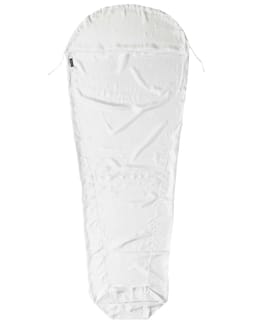
- Size and shape: choose a length that matches your sleeping bag. The rectangular, or blanket, shape is suitable for standard accommodation, while the mummy shape fits technical sleeping bags and reduces heat loss.
- Weight and thickness: the higher the weight, the more warmth, but also the heavier it is. It's up to you to find the right balance between desired warmth and acceptable weight in your backpack.
To complete your night-time kit, check out our selection of mattresses and ground sheets, the perfect companions to a sleeping bag liner for restful nights in the wild.
A sleeping bag liner makes your nights in a sleeping bag more comfortable. Lightweight, easy to handle, and usually machine washable, it's perfect for both hut stays and protecting your sleeping bag from frequent cleaning. Brands like Cocoon and Ferrino now pay special attention to finishes and seams for an accessory that lasts season after season.
FAQ: All about sleeping bag liners
What is the difference between a sleeping bag liner and a "liner"?
There is none. "Liner" is simply the term hikers use for a sleeping bag liner. Both refer to the same thin layer that goes inside your sleeping bag or is used alone in shared accommodation.
How do you care for a sleeping bag liner?
Care depends on the material. Cotton and synthetics can be machine washed at 30°C, while silk, being more delicate, is best washed by hand with a neutral pH detergent. In all cases, place your liner in a laundry bag to protect the fine fibres, and let it air dry rather than using a tumble dryer to preserve its softness.
Is a sleeping bag liner enough for sleeping in a hut?
In most heated huts with blankets, a liner alone is perfectly adequate for hygiene and saves you from carrying a bulky sleeping bag. However, for unstaffed huts or nights at altitude, it's best to combine it with a sleeping bag suited to the expected temperature.



Sign up for our newsletter
Be the first to hear about promotions, sales, special offers, snowleader events, and new brands added to our catalog!
By signing up for our newsletter, you agree to receive our personalized emails and to allow us to track whether you open them. You can change your consent at any time after you first receive a communication, or after creating your account, if applicable.


