


 Metropolitan France
 United Kingdom
 Deutschland
 Belgique
 Österreich
 España
 Italia
 Nederland
 Danmark
 Sverige
 Portugal
 Polska
 Luxembourg
 Other countries




Available colours:


Available colours:



Available colours:


20% off
On the entire city section* with the code CITY20*

Available colours:


Available colours:


FALL SALE: UP TO 50% OFF
On a wide selection of products*
Available colours:


Trekking pillows: sleep well to start fresh
After a long day of walking, the quality of your sleep determines how well you can set off again the next day. A good trekking pillow provides the neck support that's sorely missed when you roll up a jacket under your head, without adding weight to your pack. The key is to make the most of your nights, so you can recover from long days of effort.
When sleeping on the ground, under a tent, it's rare to find terrain without stones, roots, bumps and more. Comfort is therefore essential to recover from the day's exertion and to start again the next morning. Sleeping gear for outdoor use has fortunately evolved: a neck pillow for travel, a compact pillow for bivouacs, or a more enveloping model for camping-there's a solution for every night spent in the wild.
Why take a trekking pillow?
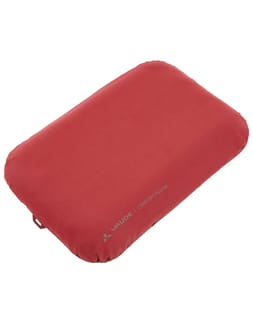
In the field, the verdict is clear: poor head support leads to a stiff neck and a difficult wake-up. Designed for outdoor sleeping, a hiking pillow keeps your neck aligned with your spine throughout the night, while often weighing just a few dozen grams. Brands like Sea to Summit or Therm-a-Rest have turned this tiny accessory into a real recovery asset, appreciated both on treks and when travelling. Its benefits come down to a few key points:
- Lightweight: the most compact ultralight models often weigh between 45 and 80 g, about the same as a cereal bar.
- Compactness: once deflated and packed in its pouch, an inflatable pillow fits in the palm of your hand.
- Neck comfort: height and firmness adapted to your sleeping position, whether you sleep on your back or side.
- Recovery: restorative sleep to tackle the next stage with fresh legs.
Inflatable, foam or self-inflating pillow: what's the difference?
Before comparing models, it's important to understand what sets apart the main types of bivouac pillows. Each offers a different balance of weight, comfort and bulk, which you should match to your needs.
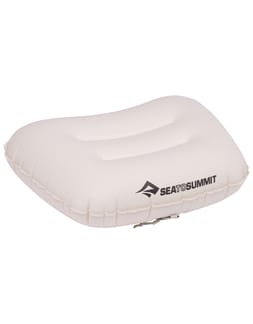
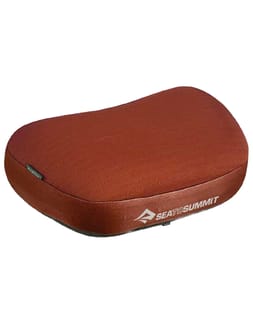
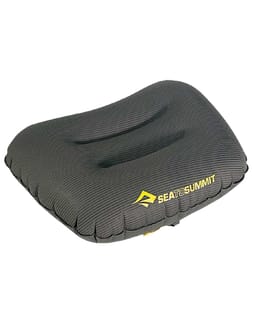
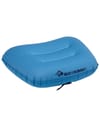
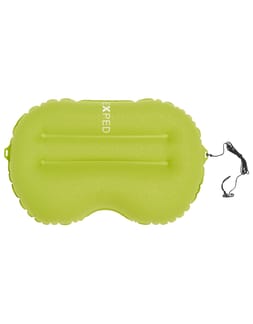
- Inflatable: ultra-compact and lightweight, with adjustable firmness depending on inflation. The top choice for lightweight trekking and long distances, as seen in the Aeros range from Sea to Summit or Exped models; at Élémenterre, the Okaro pillow is an affordable entry-level option.
- Compressible foam: more support and a feel close to a home pillow, with a slightly larger packed size, like the famous Compressible Pillow from Therm-a-Rest.
- Self-inflating: a good compromise between comfort and practicality, as it unfolds by itself without the need to blow it up.
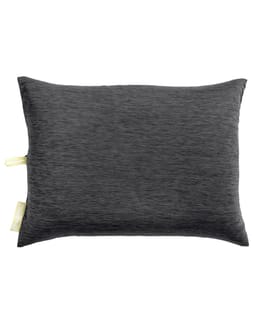
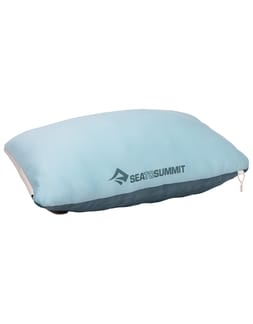
- Stuff sack model: a simple pillowcase, like those from Cocoon, where you stuff your clothes for virtually no extra bulk.
How to choose the right trekking pillow?
First, to choose your sleeping gear well, think about the conditions you'll face (climate, trip length, frequency, ground type, etc.). These factors quickly define the pillow profile that suits you, from a minimalist model for fast hiking to a generous cushion for longer nights. For example, on a bivouac, the lightness of your gear will be a priority. For campsite stays, you'll likely opt for more equipment, often heavier for maximum comfort.
Weight and compactness: key criteria
For trekking and bivouac, every gram carried is felt in your shoulders by the end of the day. A compact inflatable pillow that fits in a pocket of your backpack is the best ally for ultralight hiking; at established campsites, where weight is less of an issue, a compressible foam or self-inflating model will offer superior softness. Also check the storage system provided, as a compression pouch or integrated bag makes daily transport much easier.
Materials and durability
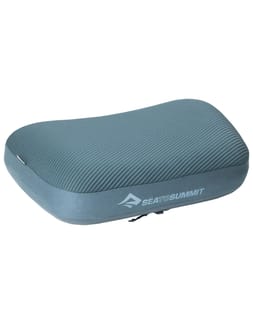
The feel against your skin depends mainly on the surface fabric. Brushed or slightly textured fabrics, found on Premium models from Sea to Summit, avoid the plastic feel of entry-level pillows and remain pleasant against your cheek. Durability depends on abrasion resistance and valve reliability, two factors that make a difference over time. For colder nights, some models use warm fillings, such as the Luxewool wool from Exped. And if you're concerned about the environmental impact of your gear, brands like Nemo develop recycled fabrics and products designed to be repaired rather than thrown away.
Which pillow for the season and weather?
The conditions you encounter have more impact than you might think on your sleeping gear choice. In cool weather, a pillow with a soft fabric cover limits the cold sensation from the air inside, and foam versions retain a reassuring warmth; these pair perfectly with a warm sleeping bag. When temperatures rise, you'll prefer a breathable fabric and lighter support. In all cases, your pillow should be chosen to work in harmony with your sleeping mat and sleeping bag, forming a consistent sleep system.
FAQ: all about trekking pillows
What is the best trekking pillow?
There is no universally superior model, as it all depends on your needs. For ultralight hiking, an inflatable pillow weighing just a few dozen grams, like the Aeros from Sea to Summit or Fillo from Nemo, is the natural choice; for camp comfort, a compressible foam pillow is cosier. The right pillow is the one that matches your sleeping bag, your sleeping position and your budget. Reviews from other hikers are also a good guide to refine your selection.
How do you care for your hiking pillow?
After your trip, let the pillow air dry with the valve open before storing it: this prevents mould from developing inside inflatable models. Clean the fabric by hand with mild soap, avoiding washing machines or tumble dryers which could damage the seams. Over time, store it deflated but not compressed to preserve the foam or elasticity of the walls, and keep the repair kit provided in case of a small puncture in the field.
How do you pack and carry your pillow during a hike?
Once deflated or compressed, the pillow goes into its pouch and then into an accessible pocket of your backpack, ready for the evening. Hikers short on space often slip it inside their sleeping bag, where it stays protected. Just be sure to keep it away from sharp objects and crampons, as a single point can puncture the fabric.
To complete your sleep system, pair your pillow with a suitable sleeping mat and the sleeping bag suited to your temperature needs. New to outdoor sleeping? Our outdoor guides and advice will help you prepare for your nights under the stars.
Whatever your adventure, all the sleeping gear you need is available at Snowleader.com!


Sign up for our newsletter
Be the first to hear about promotions, sales, special offers, snowleader events, and new brands added to our catalog!
By signing up for our newsletter, you agree to receive our personalized emails and to allow us to track whether you open them. You can change your consent at any time after you first receive a communication, or after creating your account, if applicable.


